by Future Supply Systems (FSS) 12/27/2025
For decades, the supply chain conversation has revolved around technology gaps. Legacy systems. Fragmented data. Manual processes. Limited visibility.
That argument no longer holds.
Today, the hard truth confronting logistics leaders, distributors, and operators is this:
The bottleneck is no longer technology.
The bottleneck is people.
The New Reality: Human Friction, Not System Failure
We are operating in an era where AI-driven routing, predictive analytics, automated sorting, real-time tracking, and machine learning optimization are not futuristic concepts—they are commercially available, deployable, and proven.
Yet stoppages continue. Delays persist. Packages go missing. Last-mile failures are accelerating. Customer trust is eroding.
Why?
Because human behavior is now the dominant choke point in an otherwise optimized system.
What we are seeing across the supply chain is not a lack of capability—but a failure of execution caused by human friction:
• Negligence instead of precision
• Inaccuracy instead of accountability
• Resistance instead of adoption
• Manual overrides instead of automation trust
The system is ready.
The people often are not.
Two Choke Points. Same Root Cause.
Here at Future Supply Systems, we see the same pattern emerging at both ends of distribution:
1. Supply-Side Breakdown
Inventory miscounts. Poor scanning discipline. Improper handling. Missed handoffs. Data entry errors.
These are not system limitations—they are human failures within system workflows.
2. Last-Mile Collapse
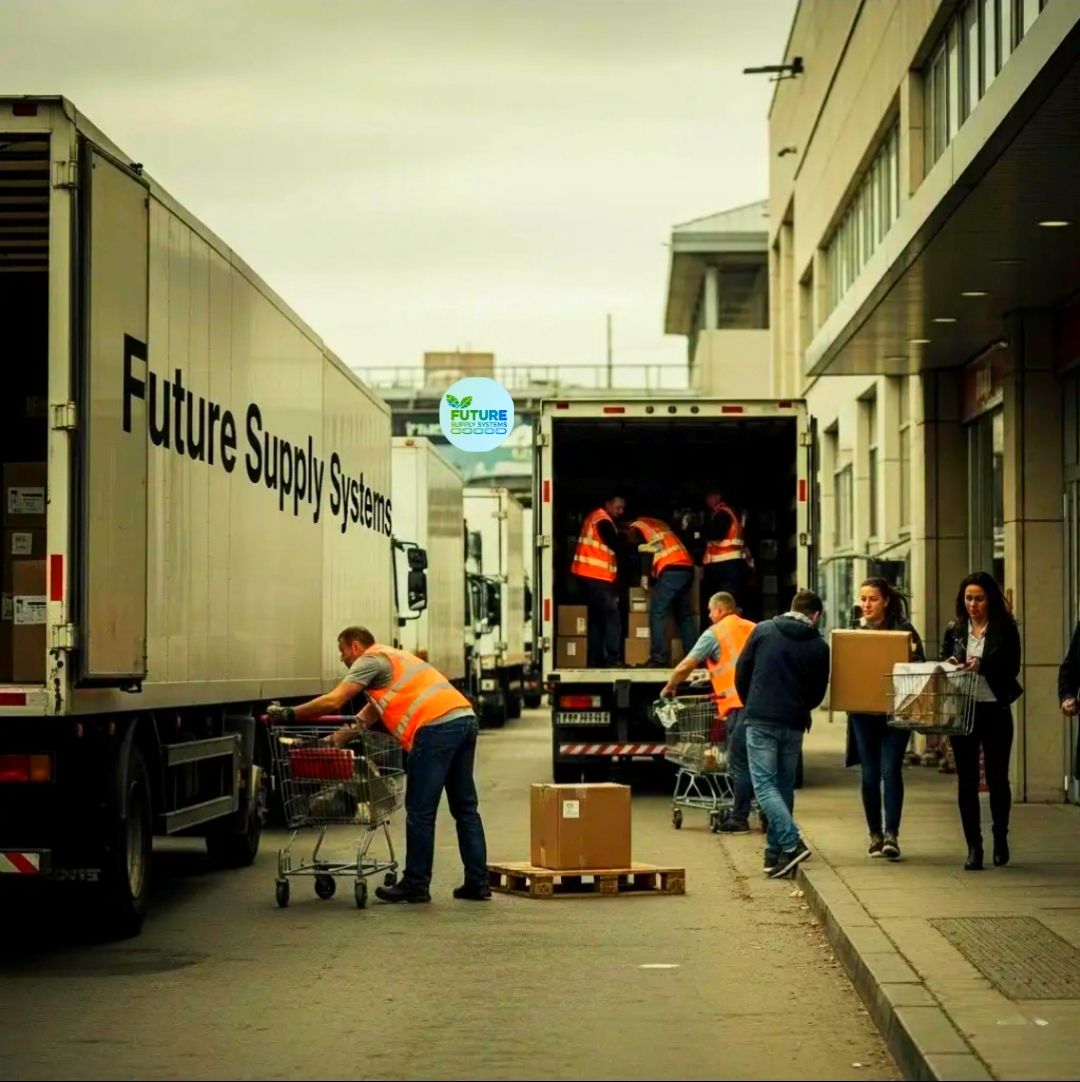
Delayed deliveries. Misdirected packages. Damaged goods. “Lost” shipments that were never actually lost—just mishandled.
The last mile is no longer a technology problem.
It is an execution discipline problem.
And the cost is measurable:
• Higher operational expenses
• SLA violations
• Customer churn
• Brand erosion
• Regulatory exposure
AI Is Ready. The Question Is: Are We?
Here’s the uncomfortable question few want to ask:
Are humans now getting in front of the very technology designed to make supply chains faster, smoother, and more resilient?
AI doesn’t forget to scan a package.
Automation doesn’t misroute out of habit.
Algorithms don’t call off accountability.
Yet organizations continue to force advanced systems to operate at the speed and accuracy of their least disciplined human node.
That mismatch is fatal.
This Is Not an Anti-Human Argument. It’s a Pro-Accountability One.
Let’s be clear: this is not about eliminating people.
It’s about redefining their role.
In the modern supply chain:
• Humans should supervise systems, not override them
• Judgment should complement automation, not contradict it
• Training must be continuous, not optional
• Accountability must be enforced, not assumed
When human engagement becomes inefficient, inaccurate, or negligent, it doesn’t just slow the chain—it breaks it.
The Strategic Imperative
We are officially at a moment where the greatest risk to supply chain performance is not disruption from outside forces, but friction from within.
The organizations that will win are those that:
• Reduce unnecessary human touchpoints
• Enforce process discipline relentlessly
• Align incentives with precision and accountability
• Let AI and automation do what they do best—without interference
The ones that don’t will continue blaming “logistics challenges” while bleeding margin and credibility.
Final Question for Industry Leaders
So we ask the question directly—and unapologetically:
Are humans now the primary blockage in supply chain and logistics performance?
If the answer makes you uncomfortable, good.
Discomfort is often the first signal that transformation is overdue.
Within Future Supply Systems, we don’t debate whether change is coming.
We help organizations decide whether they will lead it—or be slowed by it.
Leave a Reply